~ Brian Knopp, Hospitality Coach
High Emotinal Inteligence
By Justin Wright
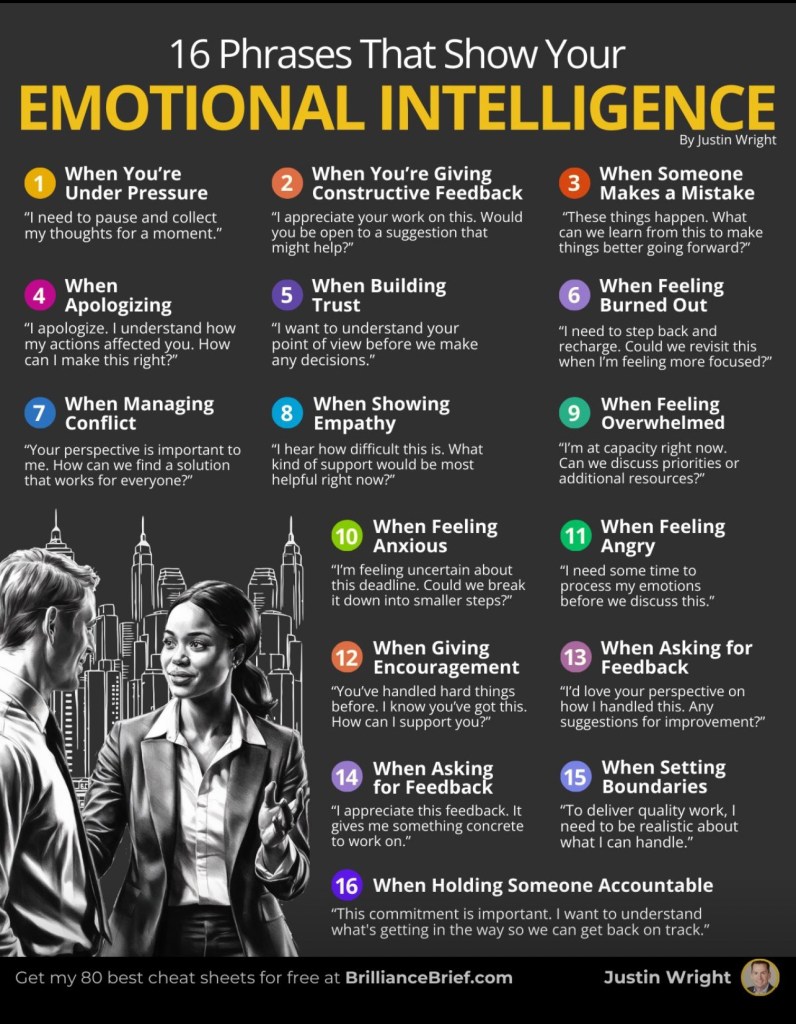
Here are 16 phrases that demonstrate emotional intelligence in various situations. Emotional intelligence (EI) involves understanding and managing one’s own emotions and recognizing the emotions of others. Key phrases are categorized by situations such as:
- Under Pressure: “I need to pause and collect my thoughts for a moment.”
- Giving Constructive Feedback: “I appreciate your work on this. Would you be open to a suggestion that might help?
- Making a Mistake: “These things happen. What can we learn from this to make things better going forward?”
- Apologizing: “I apologize. I understand how my actions affected you. How can I make this right?”
- Building Trust: “I want to understand your point of view before we make any decisions.”
- Showing Empathy: “I hear how difficult this is. What kind of support would be most helpful right now?”
- Managing Conflict: “Your perspective is important to me. How can we find a solution that works for everyone?”
- Feeling Burned Out: “I need to step back and recharge. Could we revisit this when I’m feeling more focused?”
- Feeling Overwhelmed: “I’m at capacity right now. Can we discuss priorities or additional resources?”
- Feeling Anxious: “I’m feeling uncertain about this deadline. Could we break it down into smaller steps?
- Feeling Angry: “I need some time to process my emotions before we discuss this.”
- Giving Encouragement: “You’ve handled hard things before. I know you’ve got this. How can I support you?”
- Asking for Feedback: “I’d love your perspective on how I handled this. Any suggestions for improvement?” and “I appreciate this feedback. It gives me something concrete to work on.”
- Setting Boundaries: “To deliver quality work, I need to be realistic about what I can handle.”
- Holding Someone Accountable: “This commitment is important. I want to understand what’s getting in the way so we can get back on track.”
These phrases aim to enhance communication, foster understanding, and manage relationships effectively. Emotional intelligence is increasingly recognized as a critical factor in leadership and personal success.
#BeGrand
 Straight From THE ❤️HEART…
Leave a comment