“This Sunday morning, i am thankful for Monday’s. The start of a new week and the opportunity to serve others at Lynchburg’s Grand Hotel. I appreciate the opportunity to provide comfort, bring a smile into any situation and make a positive difference in peoples lives while glorifyingGod for each opportunity.” ~Brian Knopp, Hospitality Leader
Let’s be real: a supportive workplace isn’t a bonus – it’s the baseline. By Elfried Samba, CEO & Co-founder of 3butterfly Effect
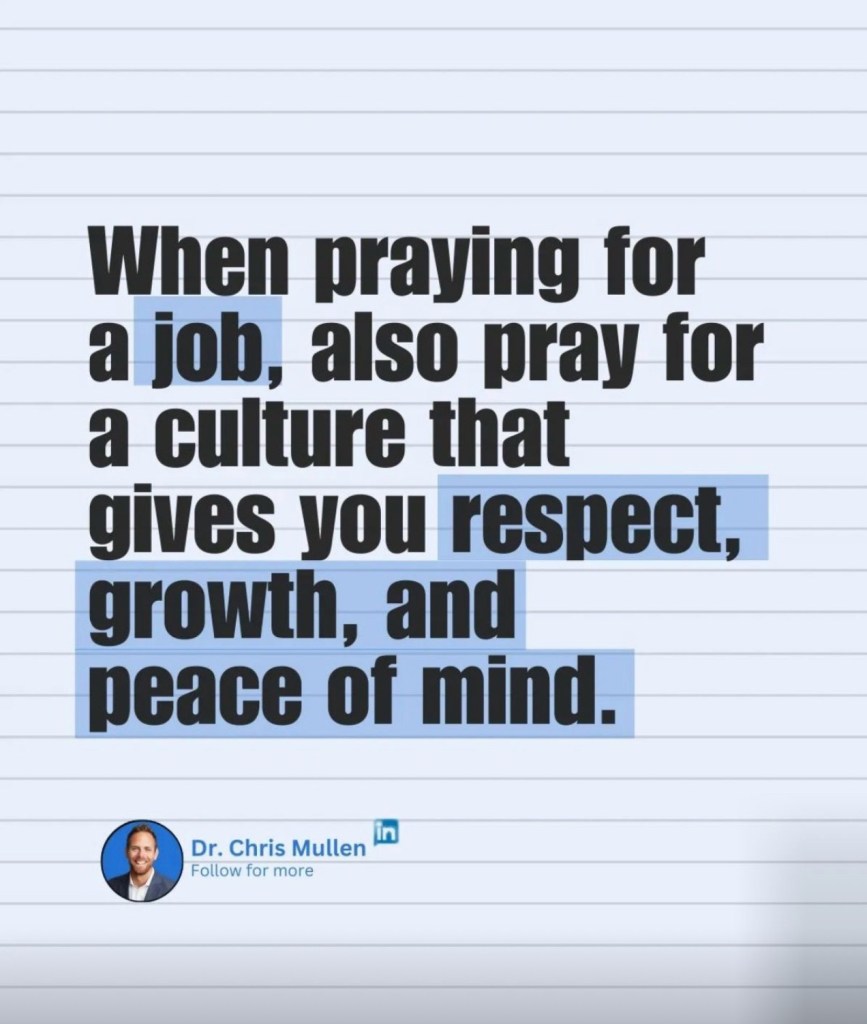
Dr. Chris Mullen has a point…
Think about the best job you’ve had.
Wasn’t it the one where you felt seen, respected, and trusted?
When people feel supported, they don’t just work harder – they thrive.
They innovate, they collaborate, and they stick around.
If you’re a leader, here’s the cheat code: show your people you care, and they’ll care about the work.
“I am excited about my new job at the Lynchburg Grand Hotel and ran across this article. This is the first hotel that I stayed at Inn Lynchburg. I’ve always wanted to work here. Looking forward to being a part of the ‘GRAND FAMILY’ here in Lynchburg.” ~ Brian Knopp, Hospitality Leader
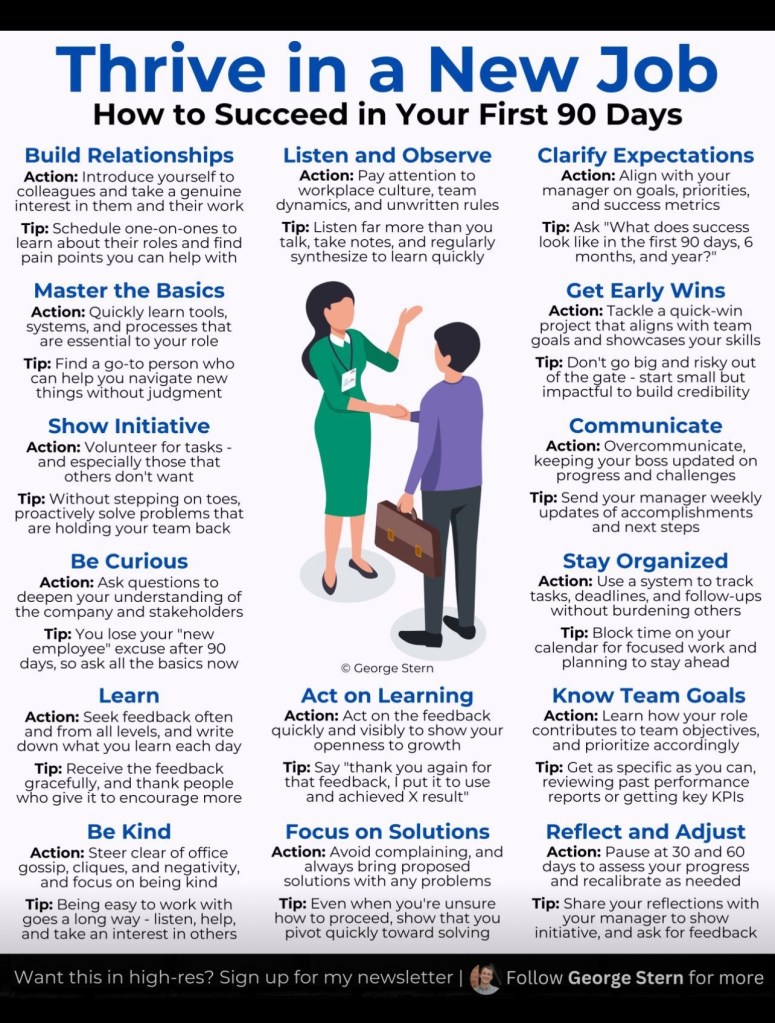
How To Make An Impact In The First 90 Days By David Sym-Smith
First impressions are important, and in a professional setting, they can have a lasting impact.
The first 90 days, often referred to as the probationary period, are your chance to settle into your new role, understand your responsibilities, connect with your team and demonstrate your value in the company Research suggests that an employee’s first 90 days will in large part determine his or her performance, longevity, and contribution to the company
By following the following strategies, you can make a meaningful impact in the first 90 days of your new job and set yourself up for long-term success and growth within the organization.
👍 Give this post a thumbs up 💬 Repost to share this with your network ➕ Follow me at for more Tips Credit: George Stern, HBR, Forbes
“ I’ve always said the only thing harder than the hotel business is the restaurant business. One of the challenges in the hotel business is that we are open 24/7 365 days a year. This can sometimes make life exciting… or I can learn to burn-out. It’s important to pace yourself and have a great team to support you.” ~ Brian Knopp, Hospitality Leader
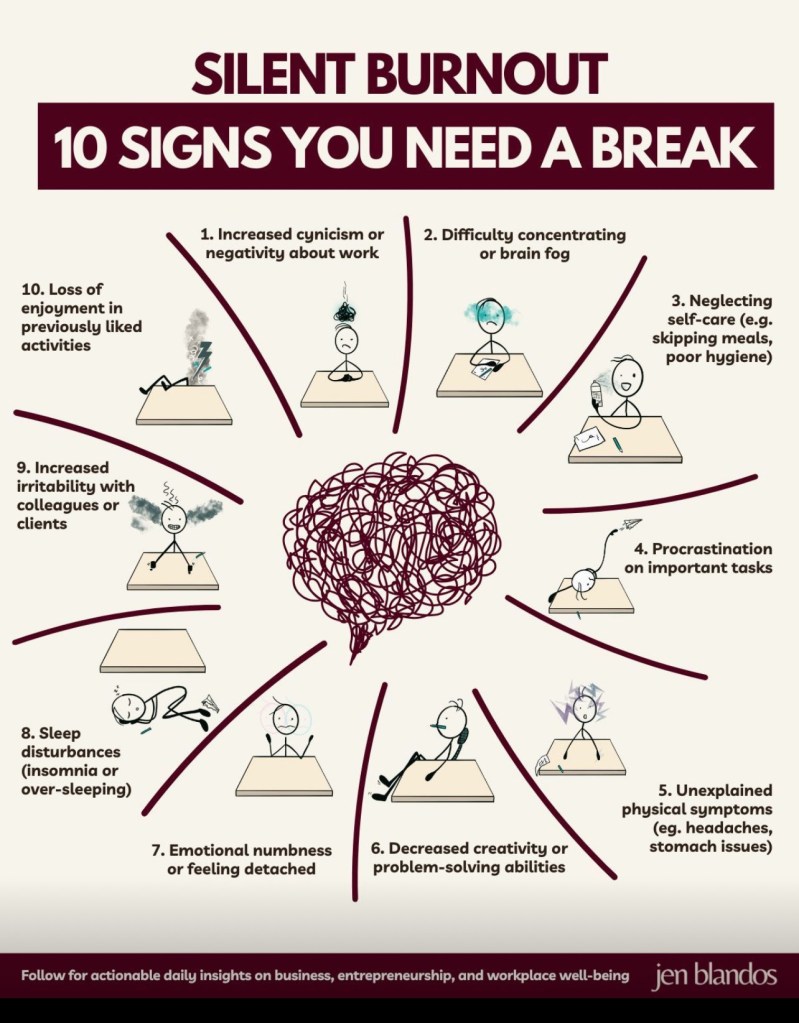
Silent Signs of Burnout By Jen Blandos, Psychology Today
Being “too busy” isn’t a flex.
It’s a warning sign.
Have you ever been on the verge of burnout? I have. So often we ignore the signs and we put it down to being busy.
But when we begin to: ↳ Struggle to focus ↳ Easily lose patience ↳ Neglect our health ↳ Have minimal sleep
They’re not just signs of being busy, they’re signs of burnout. So often, we push so hard for so long that we forget one thing – ourselves.
But if we don’t take time to reset, it’s going to hit us hard.
For me I always found that these helped the most:
↳ Prioritising fitness & movement ↳ Building a stronger, more self-sufficient team ↳ Taking a real holiday without guilt or office interruptions ↳ Setting better boundaries in business & life ↳ Giving myself permission to rest
Because if we break, everything we’ve built suffers.
Burnout doesn’t just hit us overnight. It creeps up when you’re too busy to notice.
If you’re feeling any of these, make yourself a priority this weekend.
⬇️ Tell me in the comments, what’s one thing you can do this weekend to recharge?
♻ Share this with someone who needs this reminder. ➕ Follow me for daily insights on business, entrepreneurship, and workplace well-being.
“One of the most beautiful gifts that you can receive is an apology. Unfortunately, sometimes it’s difficult to receive. When someone apologizes to you, you should gladly accept this gift and realize that everyone makes mistakes and that you should be able happiky receive it.” ~ Brian Knopp, Hospitality Leader
No one likes conflict or disagreement at work By Ashley Couto
But these 11 tips make them a lot easier:
Work is powered by people. Humans bring their humanness to the table. And that can mean we mess up or disagree.
There’s no magical set of words for every situation.
How you handle conflict and disagreement will become your reputation.
Keep these 11 principles in mind. Then the right words will follow naturally:
“A gift that God gave me was the ability to be abke ti empathize with others. Not only is this a gift that I can use to assist our guests, but also allows me to touch the hearts of our fellow team members as well. We need to understand what it’s like to walk in other shoes and their unique situations.” ~ Brian Knopp, Hospitality Leader
Awkward conversations don’t have to be painful.
By Sean McPheat
Try this ⬇️
Difficult conversations can be uncomfortable.
But avoiding them only makes things worse.
Whether you’re giving feedback, resolving conflict, or setting boundaries, these four principles will help:
✅ Clarity Be direct and specific. Avoid vague or mixed messages. Use simple and precise language. Summarise key points for better understanding. Keep the conversation on track.
✅ Empathy Listen to understand, not just to respond. Acknowledge the other person’s perspective. Show understanding with body language. Ask open-ended questions to encourage discussion. Validate emotions without necessarily agreeing or disagreeing.
✅ Calmness Control emotions and focus on the issue. Take a breath before reacting. Keep a neutral and steady tone. Don’t escalate tension with defensive words. Maintain professionalism, even if frustrated.
✅ Solutions Shift towards resolution, not blame. Focus on what can be improved. Offer practical next steps. Agree on actions and accountability. Follow up to ensure progress.
Mastering these skills can transform how you handle difficult conversations – both at work and in life.
🧠 Remember: The goal isn’t to win the conversation. It’s to create understanding and find a way forward.
What’s your best tip for handling difficult conversations? Let me know in the comments ⬇️
For more valuable content, follow me, and then hit the 🔔 button to stay updated on my future posts.
♻️ Repost to help others handle tough conversations better.
“Working in hotel sales, we spend a lot of time working remotely. This makes it more important for us to communicate effectively, especially when managing multiple properties.”~ Brian Knopp, Hospitality Leader
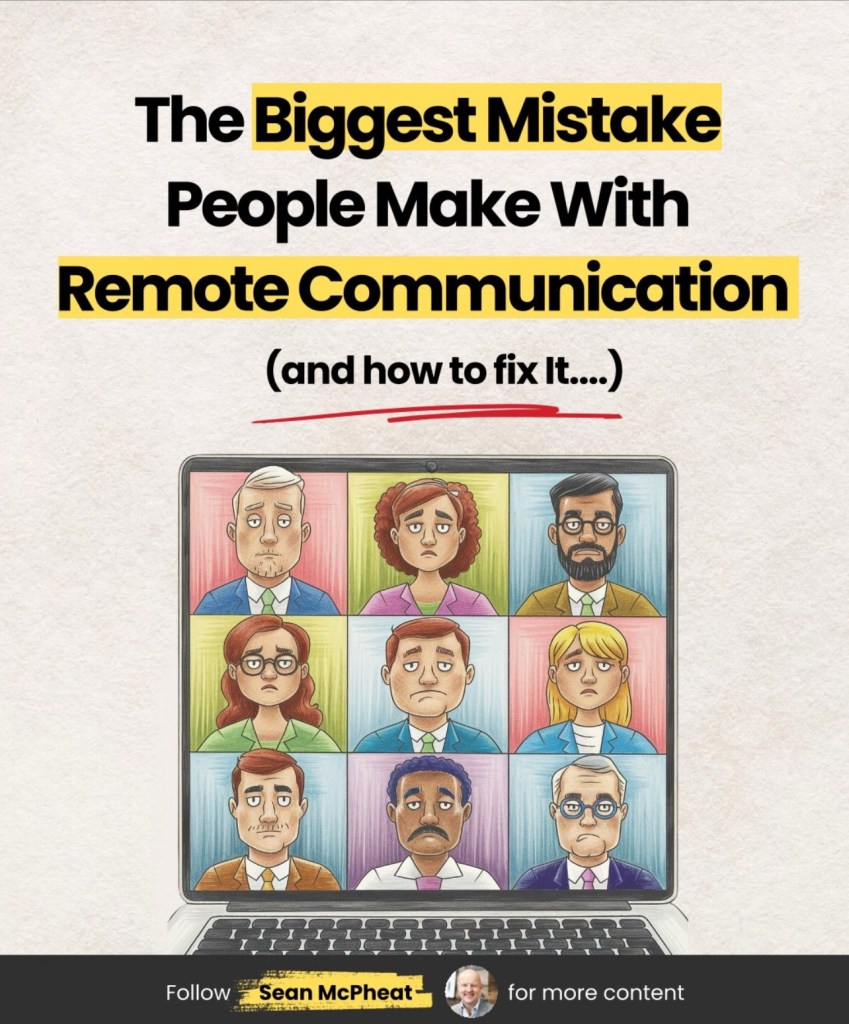
Remote communication isn’t just about tasks. By Sean McPheat
It’s about trust ⬇️
Having trained over 500,000 leaders over the years it’s easy to spot the biggest mistakes they make when communicating with remote workers.
Want to know what that mistake is?
Well, they prioritise efficiency over connection.
Here’s why that happens and how to fix it:
Why this mistake happens:
❌ Relying solely on quick emails and task-focused messages. ❌ Skipping check-ins and personal touchpoints. 👉 Leaders focus on deadlines and deliverables. 👉 They assume personal interactions are less important remotely. 👉 They think efficiency means cutting out “small talk.”
The result?
Teams feel isolated, disengaged, and undervalued.
What to do instead:
✅ Create Space for Connection
↳ Start meetings with a quick personal check-in: “How’s your week going?” or “What’s one win you’ve had recently?”
✅ Overcommunicate Clarity
↳ Be extra clear in emails and messages: “Here’s what’s needed, by when, and why it matters.”
✅ Schedule Regular 1-2-1s
↳ Use these sessions to discuss more than just work: “How are you finding the workload?” or “What support do you need?”
Why this works: ✅ Builds trust and stronger relationships. ✅ Reduces miscommunication and frustration. ✅ Keeps your team engaged and aligned, even from afar.
🧠 Remember: Remote communication isn’t just about tasks – it’s about connection, clarity, and care.
What’s your top tip for staying connected with remote teams? Share it in the comments below ⬇️
“There is no position in a hotel that is more important than another, but a toxic employee can ruin everything.” ~ Brian Knopp, Hospitality Leader
One toxic employee can wreck your culture. By Sean McPheat
Here’s how to identify them ⬇️
Toxic employees don’t just cause problems for themselves – they impact your entire organisation.
One team member who constantly complains, spreads gossip, or resists feedback can set off a chain reaction that drags everyone else down.
And the worst part?
These behaviours are often ignored or tolerated for far too long.
Here are 12 warning signs of toxic behaviour you should never overlook:
❌ Constant negativity: Employees who complain without contributing solutions.
❌ Gossip spread: Sharing rumours that destroy team trust.
❌ Blaming others: Avoiding accountability for mistakes.
❌ Resisting feedback: Reacting poorly to constructive criticism.
❌ Lack of accountability: Avoiding ownership of tasks or results.
❌ Undermining colleagues: Sabotaging or discrediting team members.
❌ Manipulative tactics: Using deceit for personal gain.
❌ Disruptive behaviour: Fuelling conflict and disrupting team harmony.
❌ Entitlement mentality: Expecting rewards without effort.
❌ Avoiding work: Evading responsibilities and deadlines.
❌ Avoiding teamwork: Reluctance to collaborate or share credit.
❌ Inconsistent performance: Being unreliable or unpredictable in delivery.
Here’s why ignoring these behaviours is so dangerous:
➡️ It demotivates high performers. Talented employees will quickly disengage when forced to work with toxic colleagues. Worse, they may leave entirely.
➡️ It destroys trust. Gossip, blame, and manipulation create an environment of fear and suspicion, making collaboration nearly impossible.
➡️ It spreads like wildfire. Negative behaviours have a ripple effect, dragging down even your most positive team members.
➡️ It impacts business outcomes. Teams with unchecked toxicity underperform, miss deadlines, and fail to innovate.
What can you do about it?
✅ Be proactive. Spot these red flags early and address them directly.
✅ Create clear standards. Ensure everyone understands what behaviours are unacceptable.
✅ Support honest conversations. Create an environment where feedback and accountability are prioritised.
✅ Act swiftly. Don’t wait to address toxic behaviour – it only gets worse over time.
Toxicity doesn’t just damage the individual – it weakens the whole team.
🧠 Remember; addressing these behaviours isn’t about being harsh.
It’s about protecting the health of your workplace and ensuring a culture of trust, collaboration, and growth.
What’s the biggest red flag you’ve seen in a team? Let me know in the comments below ⬇️
♻️ Repost to help others spot and stop toxicity in their teams!
If you want a different life.. You need different habits.
And habits don’t change on their own. They change with intention. Intention backed by action.
But action without clarity leads nowhere. Clarity is what breaks the cycles that keep you stuck.
Because when you try to change… Your mind fights back. Old habits resist. Comfort calls you back.
And here’s the truth: Habits are the dots. Individually, they seem small. But when you connect them, they create momentum.
This is why you need a routine. Your routine is simply connected habits.
Each habit feeds the next. Each action reinforces the one before.
Alone, habits are scattered. Together, they shape the structure of your life. And when your habits align, Your routine becomes unstoppable.
7 STEPS TO DI THIS:
Own your routine
Without a plan, you’ll follow someone else’s.
Design a structure that aligns with your goals.
Build habits that move you forward, not hold you back.
Break the comfort cycle
The easy path leads nowhere.
Growth requires discomfort.
Choose challenge over convenience.
Train your mind like a muscle
Strength isn’t just physical, it’s mental.
Master the art of focus and discipline.
Your future depends on what you do daily.
Cut the noise
Not everything deserves your attention.
Filter out distractions that don’t serve you.
Energy wasted on the wrong things is energy lost forever.
Build momentum through action
Small wins create big shifts.
Progress compounds over time.
Start today, no matter how small the step.
Adapt and evolve
Stagnation is the real failure.
The best routines adjust as you grow.
Stay flexible, but stay committed.
Define success on your terms
Stop living by someone else’s script.
Own your choices, your habits, your results.
The life you want is built by the actions you take.
Most people drift. They wake up and follow the same patterns. Patterns they are given by others. If you don’t take charge of your habits.. Someone else will.
If you don’t create your own routine. You’ll live by one designed for you.
Own them. Shape them. Align them.
Repost ♻️ if you find this useful. Hit the 🔔 if you enjoy my content.